Showing posts with label Books. Show all posts

Sunday, October 17, 2010

Gaspar Noé - Enter the Void [Screenplay] (2009)

http://img145.imageshack.us/img145/1783/enterf.jpg

http://img21.imageshack.us/img21/5333/imdbimage.jpg

Synopsis: A drug-dealing teen is killed in Japan, after which he reappears as a ghost to watch over his sister.

http://rapidshare.com/files/425647231/Gaspar_No___-_Enter_the_Void__Screenplay_.pdf

no pass

Monday, October 4, 2010

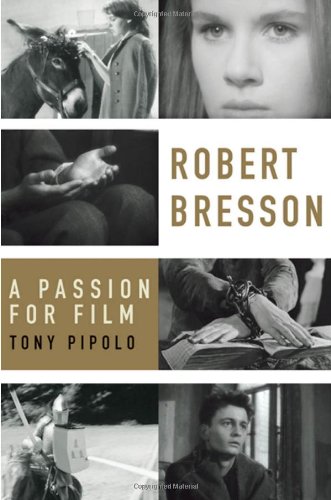
Tony Pipolo - Robert Bresson: A Passion for Film (2010)

http://ecx.images-amazon.com/images/I/518B1jRqmEL.jpg

Description:

Perhaps the most highly regarded French filmmaker after Jean Renoir, Robert Bresson created a new kind of cinema through meticulous refinement of the form's grammatical and expressive possibilities. In thirteen features over a forty-year career, he held to an uncompromising moral vision and aesthetic rigor that remain unmatched. Robert Bresson: A Passion for Film is the first comprehensive study to give equal attention to the films, their literary sources, and psycho-biographical aspects of the work. Concentrating on the films' cinematographic, imagistic, narrative, and thematic structures, Pipolo provides a nuanced analysis of each film-including nearly 100 illustrations-elucidating Bresson's unique style as it evolved from the impassioned Les Anges du péche to such disconsolate meditations on the world as The Devil Probably and L'Argent. Special attention is also given to psychosexual aspects of the films that are usually neglected. Bresson has long needed a thoroughgoing treatment by a critic worthy to the task: he gets it here. From it emerges a provocative portrait of an extraordinary artist whose moral engagement and devotion to the craft of filmmaking are without equal.

Summary: A wonderful guide for appreciation and understanding!
Rating: 5

I was given this book for Christmas, and couldn't be happier with it. Bresson is a subject who has been needing some responsible modern appreciation free from the blatant agendas of Gary Indiana and David Ehrenstein, both of whom push their interpretations as the only real readings of the films of Bresson and prefer to discredit his spirituality, regardless of what the man himself had stated numerously in interviews throughout his entire career. This situation is addressed in the introduction to the book, in which the author himself points out this dilemma.

Pipolo has pursued Bresson with zeal and accumulated a wealth of knowledge that he shares with us from hundreds of articles, reviews, interviews, essays and firsthand discussions with the filmmaker's widow. He has provided personal translations of French interviews with Bresson, which only further demonstrates the seriousness he approached this book with.

He also offers extensive readings of each film, with context regarding film history and cinematic techniques, and offers new appreciation for lesser-known films in Bresson's oeuvre.

Using his background in both film history and psychology, he has interesting and illuminating interpretations about the master's cinema. Unlike Indiana and others, however, he is quick to point out these are merely personal interpretations, and he offers them only for consideration, opting to let each viewer ultimately come to their own conclusions. This, to me, is what I look for in academic film criticism.

This book makes a wonderful companion to exploring the works of Robert Bresson, aiding newcomers in appreciation and enriching the experience for the established lover of Bresson.


* Publisher: Oxford University Press, USA
* Number Of Pages: 407
* Publication Date: 2010-01-19
* ISBN-10 / ASIN: 019531980X
* ISBN-13 / EAN: 9780195319804

* Publisher: Oxford University Press, USA
* Number Of Pages: 407
* Publication Date: 2010-01-19
* ISBN-10 / ASIN: 0195319796
* ISBN-13 / EAN: 9780195319798


http://www.megaupload.com/?d=U7KV0N93

no pass

Thursday, August 26, 2010

Grant Hayter-Menzies - Mrs. Ziegfeld: The Public and Private Lives of Billie Burke (2009)

http://ecx.images-amazon.com/images/I/516iGkIMlmL.jpg

Review
"Enjoyable biography...an eye-opening look at the actress millions know only as Glinda the Good Witch...highly recommended." --Library Journal

"Extensive research...valuable...an excellent job." --theglobeandmail.com

Description
Broadway actress Billie Burke was one of the most sought after young stage beauties of her time, stealing the hearts of Enrico Caruso, Mark Twain, and, most importantly, famed Broadway producer Florenz Ziegfeld, who became her husband. Following Ziegfeld's death, the threats of financial ruin and encroaching age forced Burke to recreate herself as a Hollywood character actress. This biography benefits from the cooperation of the daughter and grandchildren of Burke and Ziegfeld, as well as from anecdotes provided by actors who performed with Burke on the stage and screen. In addition to studying the character and significance of Burke's greatest screen role in Glinda the Good Witch of the North, this richly illustrated book also provides a complete history of Burke's stage, screen, and radio work.

About the Author
Biographer Grant Hayter-Menzies lives in Sidney, British Columbia. His works include biographies of Charlotte Greenwood, Princess Der Ling, and Billie Burke Ziegfeld.

Summary: Fantastic!
Rating: 5

As a long-time fan of The Wizard of Oz (1939), growing up, to me, Billie Burke WAS Glinda the Good Witch because that's about the only film I ever saw her in. As I began researching my own book on Olive Thomas, Billie Burke became an integral part of my research because of her marriage to Ziegfeld (Olive's boss in the Frolic and Follies), hence the title of this book - "Mrs. Ziegfeld." I learned a lot more about her as I delved into the life of Ziegfeld for my own project and then the road detoured away from her again. Now, this book fills in all the gaps! What a wonderful life and how beautifully it's told here in this book. One of the best books I've read this year, by far. You will not be disappointed if you buy this book. If you think you know everything about Billie Burke, think again. This is the definitive reference guide to her life and career. Fantastic!


Summary: Only bad witches are ugly!
Rating: 5

A wonderful bio of actress Billie Burke, known mostly as Glinda the Good Witch in Mervyn LeRoy's "The Wizard of Oz" (1939), it is astonishing that no one has given Billie this much personal detail before now. An interesting view into the early years of stage and screen, the bio really finds itself in the tumultuous marriage between Billie and Flo Ziegfeld; his raging infidelities and bank-breaking spending somehow became part of the glue that kept them together, that and an absolute adoration of each other.

After Flo's death in 1932, Billie was left with enormous debts that had to be paid off - hence her film career. Never really trusting or liking the film medium, she nonetheless went to Hollywood where the money was. A little sad towards the end, when Billie seemed to feel she was disappearing (welcome to Hollywood), the bio is still a triumph and I wonder why her life with Ziegfeld has never received real cinematic treatment. I can see Kate Winslett playing Billie now.

Again, a wonderful bio. In it's closing pages, one feels as if Burke has left the house after a long, fascinating, humorous and poignant visit.

http://rapidshare.com/files/310417513/MrsZiegf.pdf

no pass

Felicity Collins & Therese Davis - Australian Cinema After Mabo (2005)

http://f.imagehost.org/0575/australian_mabo.jpg

Review
'The authors offer a compelling argument about the development of Australian cinema in the wake of the High Court's 1993 Mabo judgement, which overturned the founding principle of terra nullius - the myth that Australia was 'empty' prior to European settlement/invasion. This belated realization, Collins and Davis argue, opened a completely new chapter in the country's national cinema. The late 1990s and early 2000s have seen Australian film-makers respond by reflecting critically upon Australia's unresolved historical 'trauma' and restaging the country's colonial history ... the book is strong in addressing films directly responsive to the crumbling myth of terra nullius ... it ... offers an excellent, much-needed sophisticated contribution to contemporary political, historical and cinematic debates around Australian national identity, while evidencing the continuing weight and relevance of film as a culturally engaged form.' Year's Work in Critical and Cultural Theory

Description
Australian Cinema After Mabo is the first comprehensive study of Australian national cinema in the 1990s. Using the 1992 Mabo decision as a starting point, it looks at how the Mabo decision, where the founding doctrine of terra nullius was overruled, has destabilised the way Australians relate to the land. It asks how we think about Australian cinema in the post Mabo era, and what part it plays in the national process of reviewing our colonial past and the ways in which settlers and indigenous cultures can co-exist. Including The Tracker, Kiss or Kill, The Castle, Love Serenade and Yolngu Boy among numerous others, this book highlights turning points in the shaping of the Australian cinema since Mabo. It is essential reading for anyone studying Australian cinema and for those interested in the ways in which land politics has impacted upon the way we imagine ourselves through cinema.

http://rapidshare.com/files/139168443/Australian_Cinema_After_Mabo.pdf

no pass

Richard Allen, Malcolm Turvey - Camera Obscura, Camera Lucida: Essays in Honor of Annette Michelson (2002)

http://images.barnesandnoble.com/images/16860000/16864069.JPG

Annette Michelson’s contributions to art and film criticism over the last three decades have been unparalleled. This volume honors her unique legacy with original essays by some of the many scholars who have been influenced by her work. Some continue her efforts to develop theoretical frameworks for understanding modernist art, while others practice her form of interdisciplinary criticism in relation to avant-garde and modernist art works and artists. Still others investigate and evaluate Michelson’s work itself. All in some way pay homage to her extraordinary contribution.

About the Author
Richard Allen is Associate Profesor of Cinema Studies at New York University. Malcolm Turvey teaches at Sarah Lawrence College. They recently collaborated in editing 'Wittgenstein, Theory and the Arts' (London: Routledge, 2001)

http://rapidshare.com/files/309941502/CameLuci.pdf
no pass

Abé Mark Nornes - Japanese Documentary Film: The Meiji Era through Hiroshima (2003)

http://archive.sensesofcinema.com/images/04/30/japanese_documentary_film.jpg

Quote:
Among Asian countries-where until recently documentary filmmaking was largely the domain of central governments-Japan was exceptional for the vigor of its nonfiction film industry. And yet, for all its aesthetic, historical, and political interest, the Japanese documentary remains little known and largely unstudied outside of Japan. This is the first English-language study of the subject, an enlightening close look at the first fifty years of documentary film theory and practice in Japan.

Beginning with films made by foreigners in the nineteenth century and concluding with the first two films made after Japan's surrender in 1945, Abé Mark Nornes moves from a "prehistory of the documentary," through innovations of the proletarian film movement, to the hardening of style and conventions that started with the Manchurian Incident films and continued through the Pacific War. Nornes draws on a wide variety of archival sources-including Japanese studio records, secret police reports, government memos, letters, military tribunal testimonies, and more-to chart shifts in documentary style against developments in the history of modern Japan.

Abé Mark Nornes is associate professor at the University of Michigan, where he teaches in the Department of Asian Languages and Cultures and the Program in Film and Video Studies.

# Hardcover: 248 pages
# Publisher: University of Minnesota Press (15 Jul 2003)
# Language English
PDF

http://rapidshare.com/files/276270001/Abe_Mark_Nornes_-_Japanese_Documentary_Film._The_Meiji_Era_Through_Hiroshima__Visible_Evidence__V._1

no pass

Austin Thomas & Martin Barker - Contemporary Hollywood Stardom (2003)

http://f.imagehost.org/0571/contemporary_HS.jpg

Taking account of the major developments in the field of star studies, this book explores the political economy of stardom, questions of performance, the effect on stardom of convergence between the film industry and other leisure industries, and the role of audiences. The book combines a review of current trends with case studies of individual stars enabling students and researchers to widen their knowledge of the field and explore new ways of approaching the star phenomenon.

# Paperback: 304 pages
# Publisher: A Hodder Arnold Publication (August 14, 2003)
# Language: English

http://rapidshare.com/files/139168447/Contemporary_Hollywood_Stardom.pdf

no pass

Stephen Prince - Classical Film Violence (2003)

http://f.imagehost.org/0837/classical_film_violence.jpg

This work examines the interplay between the aesthetics and the censorship of violence in classic Hollywood films from 1930 to 1968, the era of the Production Code, when filmmakers were required to have their scripts approved before they could start production. Stephen Prince explains how Hollywood's filmmakers designed violence in response to the regulations of the Production Code Administration (PCA) and regional censors. Taking this one step further, he shows that graphic violence in contemporary films actually has its roots in these early films. He explains how Hollywood's filmakers were drawn to violent scenes and how they "pushed the envelope" of what they could depict by manipulating the PCA. Examining violent scene construction in key films of the period, Prince shows that many choices about camera positions, editing and blocking of the action and sound were functional responses by filmmakers to regulatory constraints, necessary for clearing release approval from the PCA and then in surviving scrutiny by the nation's state and municipal censor boards. Prince's study is a stylistic history of American screen violence that is grounded in industry documentation. Using PCA files, he traces the negotiations over violence carried out by filmmakers and PCA officials and then shows how these negotiations left their traces on picture and sound in the finished films. Almost everything revealed by this research is contrary to what most have believed about Hollywood and film violence. Chapters include "Throwing the Extra Punch" and "Cruelty, Sadism and the Horror Film".

http://rapidshare.com/files/139168445/Classical_Film_Violence.pdf

no pass

Steve Chibnall & Julian Petley - British Horror Cinema (2001)

http://i48.tinypic.com/20028m.jpg

Review
'Featuring contributions from such genre stalwarts as Kim Newman, Mark Kermode and Peter Hutchings, the book contains enough intriguing insights to keep even jaded devotees flicking through its pages.' - Film Review

'A very good reference point for anyone interested in the British horror film through the generations.' - Journal of European Area Studies

Product Description
Going beyond the Hammer, this book investigates a wealth of horror filmmaking in Britain from early chillers like The Ghoul and Dark Eyes of London to acknowledged classics such as Peeping Tom and The Wicker Man.

# Paperback: 256 pages
# Publisher: Routledge; 1 edition (15 Nov 2001)
# Language English
PDF

http://anonym.to/?http://rapidshare.com/files/298794309/British_horror_cinema.pdf

no pass

Kristin Thompson & David Bordwell - Film Art. An Introduction [6th Ed.] (2001)

http://a.imagehost.org/0310/Bordwell_film_art.jpg

Quote:

This sixth edition improves upon the fifth edition, primarily by updating many examples to reflect more recent films. Especially interesting is the array of color plates at the center of the book, which helps to make related examples even more vivid.
user comment on amazon

# Paperback: 458 pages
# Publisher: McGraw-Hill Education; 6Rev Ed edition (1 Nov 2000)
# Language English
PDF

http://rapidshare.com/files/276270062/Bordwell_and_Thompson__Film_Art_An_Introduction_Sixth_Edition.pdf.html

Peter Lev - American Films of the 70s: Conflicting Visions (2000)

http://f.imagehost.org/0564/american70s.jpg

While the anti-establishment rebels of 1969's Easy Rider were morphing into the nostalgic yuppies of 1983's The Big Chill, Seventies movies brought us everything from killer sharks, blaxploitation, and disco musicals to a loving look at General George S. Patton. Indeed, as Peter Lev persuasively argues in this book, the films of the 1970s constitute a kind of conversation about what American society is and should be—open, diverse, and egalitarian, or stubbornly resistant to change.

Examining forty films thematically, Lev explores the conflicting visions presented in films with the following kinds of subject matter:

Hippies (Easy Rider, Alice's Restaurant)
Cops (The French Connection, Dirty Harry)
Disasters and conspiracies (Jaws, Chinatown)
End of the Sixties (Nashville, The Big Chill)
Art, Sex, and Hollywood (Last Tango in Paris)
Teens (American Graffiti, Animal House)
War (Patton, Apocalypse Now)
African-Americans (Shaft, Superfly)
Feminisms (An Unmarried Woman, The China Syndrome)
Future visions (Star Wars, Blade Runner)
As accessible to ordinary moviegoers as to film scholars, Lev's book is an essential companion to these familiar, well-loved movies.

?http://rapidshare.com/files/139168439/American_Films_of_the__70S_-_Conflicting_Visions.pdf

Noel Carroll - The Philosophy of Horror: Or, Paradoxes of the Heart (1990)

http://g.imagehost.org/0884/PoHorror.jpg

Product Description
Noel Carroll, film scholar and philosopher, offers the first serious look at the aesthetics of horror. In this book he discusses the nature and narrative structures of the genre, dealing with horror as a "transmedia" phenomenon. A fan and serious student of the horror genre, Carroll brings to bear his comprehensive knowledge of obscure and forgotten works, as well as of the horror masterpieces. Working from a philosophical perspective, he tries to account for how people can find pleasure in having their wits scared out of them. What, after all, are those "paradoxes of the heart" that make us want to be horrified?

# Paperback: 272 pages
# Publisher: Routledge; 1 edition (January 19, 1990)
# Language: English
PDF

http://rapidshare.com/files/249658655/The_Philosophy_of_Horror_-_Or__Paradoxes_of_the_Heart-Noel_Carroll_.pdf

Sergei M. Eisenstein - The psychology of composition (1988)

http://h.imagehost.org/0541/Eisenstein_psychology.jpg

'Watson and Scotland Yard always work along the line of direct
logic, Sherlock Holmes works not by logic, but by dialectics'. This
dialectics, in its turn, draws on 'the whole fund of prelogical,
sensuous thought' that 'serves as a fund of the language of form' that
Eisenstein defines as 'readable expressiveness'. Eisenstein's
elaborate study of a method of art rooted in 'the twilight stage of
primitive thought' moves from folk tales to Shakespeare, Balzac,
Gogol, Tolstoi, Dostoevsky, and Mayakovsky, to come eventually to
the detective story, 'the most effective genre of literature' and 'the
most naked expression of bourgeois society's fundamental ideas on
property', as it is told by Poe, Chesterton, Dorothy Sayers, Ellery
Queen, and Hitchcock in Spellbound.
Writing while he was making Ivan, Eisenstein opens up, in his
characteristic manner, a whole area of thinking on 'the psychology
of composition'. Published in English for the first time, these lectures
and lecture notes have been assembled and translated by Jay Leyda
and Alan Upchurch.

CONTENTS

Introductory Note
The Psychology of Art
Conspectus of Lectures on the Psychology of Art
The Psychology of Composition
On the Detective Story
Appendix. Lectures on Literature
Notes and Commentary
Index

http://rapidshare.com/files/304902306/Eisenstein.The.psychology.of.composition.pdf

no pass

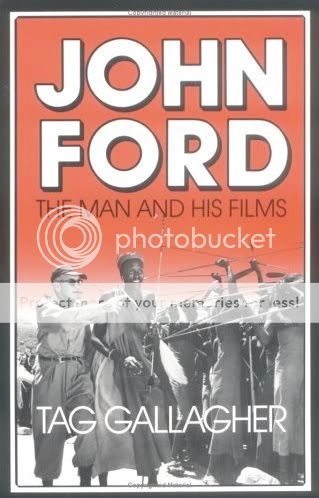
Tag Gallagher - John Ford: The Man and his Movies (2007)

http://i370.photobucket.com/albums/oo143/lohmannn/Bild3.jpg

This is the revised and enlarged version of Tag Gallagher's great book on John Ford.
659 pages, with lots of new screenshots and frame enlargements.

The book was originally published in 1986

http://rapidshare.com/files/298793658/Tag.Gallagher-John.Ford-SMz.rar

no pass

Donald Richie - Japanese Cinema: Film Style and National Character (1971)

http://i188.photobucket.com/albums/z75/tacokinen/JapaneseCinemaCover.jpg

from amazon.com


5.0 out of 5 stars Comprehensive, informative overview, June 29, 2002
By A Customer
This review is from: Japanese Cinema: Film Style and National Character. (Paperback)
This book makes Japanes movies accessible to Western audiences. It is a succinct history of Japanese film through 1970 as well as an exploration of Japanese culture. The book is comprehensive and discusses both well-known classics and popular films. The author does a good job of establishing the historical basis for the important post-war films. The book includes numerous stills from over 75 films, and a great appendix are great tools for building a film buffs must-see list!

http://rapidshare.com/files/276270090/Donald_Richie_-_Japanese_Cinema_Film_Style_And_National_Character.pdf

no pass

Gene Youngblood - Expanded Cinema (1970)

http://h.imagehost.org/0836/expanded.jpg

"Today when one speaks of cinema, one implies a metamorphosis in human perception," writes the author of this extraordinary book. "Just s the term 'man' is coming to mean man / plant / machine, so the definition of cinema must be expanded to include videotronics, computer science, and atomic light."

In a brilliant and far-ranging study, Gene Youngblood traces the evolution of cinematic language to the end of fiction, drama, and realism. New technological extensions of the medium have become necessary. Thus he concentrates on the advanced image-making technologies of computer films, television experiments, laser movies, and multiple-projection environments, laser movies, and multiple-projection environments. Outstanding works in each field are analyzed in detail. Methods of production are meticulously described, including interviews with artists and technologists. Expanded Cinema is filled with provocative post-McLuhan philosophical probes into :"the Paleocybernetic Age," "the videosphere," and "the new nostalgia," all in the context of what the author calls "the global intermedia network." In "Image-Exchange and the Post-Mass Audience Age," Mr. Youngblood discusses the revolutionary implications of videotape cassettes and cable television as educational tools. His observations are placed in a comprehensive perspective by an inspiring introduction written by R. Buckmister Fuller. Vast in scope, both philosophical and technical, Expanded Cinema will be invaluable to all who are concerned with the audio-visual extensions of man, the technologies that are reshaping the nature of human communication.

http://rapidshare.com/files/305631140/Gene_Youngblood_-_expanded_cinema.pdf

no pass

Sunday, August 15, 2010

Ben Dickenson - Hollywood's New Radicalism: War, Globalisation and the Movies from Reagan to George W. Bush (2006)

http://ecx.images-amazon.com/images/I/41P8RA7AYXL.jpg

Review
"Addresses one of the central concerns of media studies: how much latitude do creative people have to influence the political content of films in the corporate and commercial environment of Holloywood. Dickenson has done the hard work of exploring this issue in detail, and the result is a terrific book, full of insight and intelligence."--Robert W. McChesney author, The Problem of th eMedia, and Professor at University of Illinois at Urbana-Champaign
"Most Hollywood performers with progressive politics are anti-war or anti-globalization. Here's a book that explains how the industry we're in really works and how some of us try to get a human message through the system. Without question an enjoyable and stimulating read." --Ed Asner

Product Description
Mixing political and film analysis with exclusive interviews with Hollywood movers and shakers, Ben Dickenson dissects the social context of the last twenty-five years, from Reagan’s Presidency to George W. Bush. He uncovers significant political realignments in the movie industry, in its aesthetic values and in the make-up of Hollywood talent and traces how successive presidents and globalization have opened the way for the anti-globalization movement in Hollywood, which in turn has led to changes in film output. The book brings the story of Hollywood radicalism up to and through the 2004 Presidential election.

About the Author
Ben Dickenson writes about film for many publications and has a Master’s degree in Film and Television from the University of Westminster, London.


* Publisher: I. B. Tauris
* Number Of Pages: 232
* Publication Date: 2006-03-03
* ISBN-10 / ASIN: 1845110250
* ISBN-13 / EAN: 9781845110253


http://www.filesonic.com/en/file/13769997/Hollywood_s_New_Radicalism.pdf

no pass

Steven Brown - Cinema Anime (2008)

http://media.us.macmillan.com/jackets/500H/9780230606210.jpg

This collection charts the terrain of contemporary Japanese animation, one of the most explosive forms of visual culture to emerge at the crossroads of transnational cultural production in the last twenty-five years. The essays offer bold and insightful engagement with anime's concerns with gender identity, anxieties about body mutation and technological monstrosity, and apocalyptic fantasies. The contributors dismantle the distinction between "high" and "low" culture and offer compelling arguments for the value and importance of the study of anime and popular culture as a key link in the translation from the local to the global.

Both cinema and animation have served simultaneously as transnational cultural forms as well as national forums, formed by specific discourses on nationalism and modernization. In fact, in the 1910s-20s Japan, animation was not defined as distinct from cinema in terms of social regulations or production concerns. Animation, together with cinema, came under the scrutiny of public educators, censors and national ideologues. The point of intersection for these diverse concerns was the construction of national cinema for international dissemination. The attempt of Cinema Anime to dismantle the distinction between cinema and animation, national cinema and transnational visual culture, is genuinely challenging, but definitely necessary in the tension-ridden period of media globalization." -Daisuke Miyao, University of Oregon, USA "Cinema Anime is an important and thought-provoking collection of essays by a number of the leading figures in the field. It includes some of the first scholarly work on several challenging and noteworthy anime that have not received enough academic attention up to now. With chapters that range from cross-cultural overviews to ambitious critical interventions, this volume will be of interest to a wide audience, from students to experienced scholars. Indeed, Cinema Anime should be required reading for anyone committed to anime criticism." -Christopher Bolton, Senior Editorial Board, Mechademia "The brain is the screen," as quoted in the introduction, is an apt expression of Cinema Anime's aim to keep thinking in new ways about anime even as it gains its mindshare, to take new positions towards it even as it finds its place. Its academics know where to look within - LAIN, the one show that best learned the liberating message of EVANGELION; Satoshi Kon, the most important anime director to emerge in the past decade - and without, showing how film technology itself informs the narrative of anime and how contemporary installation artists draw it forth from flatland to examine our real space. Cinema Anime rephrases the question: where anime is, rather than what it is to be defined.

Steven Brown is Associate Professor of Japanese Literature and Popular Culture at the University of Oregon.

256 p.

http://depositfiles.com/files/fearfitlu
or
http://www.filesonic.com/en/file/14062427/Cinema_Anime.rar

no pass

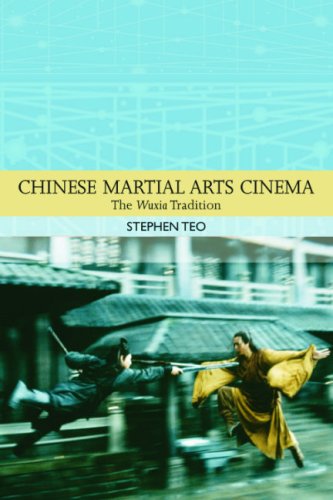
Stephen Teo - Chinese Martial Arts Cinema: The Wuxia Tradition (2009)

http://ecx.images-amazon.com/images/I/51uarWc26sL._.jpg

The traditional martial arts genre known as wuxia (literally "martial chivalry") became popular the world over through the phenomenal hit Crouching Tiger, Hidden Dragon (2000). This book unveils the rich layers of the wuxia tradition as it developed in the early Shanghai cinema of the late 1920s and in the Hong Kong and Taiwan film industries of the 1950s and beyond. Stephen Teo follows the tradition from its beginnings in Shanghai cinema to its rise as a serialized form in silent cinema and its prohibition in 1931. He shares the fantastic characteristics of the genre, their relationship to folklore, myth, and religion, and their similarities and differences with the kung fu sub-genre of martial arts cinema. He maps the protagonists and heroes of the genre, in particular the figure of the lady knight-errant, and its chief personalities and masterpieces. Directors covered include King Hu, Chu Yuan, Zhang Che, Ang Lee, and Zhang Yimou, and films discussed are Come Drink With Me (1966), The One-Armed Swordsman (1967), A Touch of Zen (1970-71), Hero (2002), House of Flying Daggers (2004), The Promise (2005), The Banquet (2006), and Curse of the Golden Flower (2006).

http://www.filesonic.com/en/file/14474319/Chinesse_Martial_Arts_Cinema_-_The_Wuxia_Tradition.pdf

no pass

John Berra - Directory of World Cinema: Japan (2010)

https://blogger.googleusercontent.com/img/b/R29vZ2xl/AVvXsEiB2XbpyfhBy7AUJUDyo0gdhnb1QQ1zvPHgZ4zxCwN6OGD8yGNVD7srpOD11LXTtnNuW4CAQaUKftSE67xxYHi7QVpzmOkZmcILrbleqQqwXGjGtLn2RBzHSef8BLNfkYIMSQN8Dfs140PM/s320/DirectoryOfWorldCinemaJapan.jpg


From the revered classics of Akira Kurosawa, to the modern marvels of Takeshi Kitano, the films that have emerged from Japan represent a national cinema that has gained worldwide admiration and appreciation. The Directory of World Cinema: Japan provides an insight into the cinema of Japan through reviews of significant titles and case studies of leading directors, alongside explorations of the cultural and industrial origins of key genres. The directory aims to play a part in the distribution of academic output by building a forum for the study of film from a disciplined theoretical base.

This is in the form of an A-Z of reviews, longer essays and research resources. The cinematic lineage of samurai warriors, yakuza enforcers and atomic monsters are discussed in addition to the politically charged works of the Japanese New Wave, making this a truly comprehensive volume.

Chapter titles
Introduction by the Editor
John Berra

Film of the Year
Achilles and the Tortoise

Festival Focus
Nippon Connection

Industry Spotlight
The Arts Theatre Guild

Cultural Crossover
Art & Film

Directors
Takeshi Kitano; Satoshi Kon; Akira Kurosawa

Alternative Japan
Essay

Alternative Japan
Reviews

Anime / Animation
Essay

Anime / Animation
Reviews

Chambara / Samurai Cinema
Essay

Chambara / Samurai Cinema
Reviews

Contemporary Blockbusters
Essay

Contemporary Blockbusters
Reviews

Jidaigeki & Gendaigeki / Period & Contemporary Drama
Essay

Jidaigeki & Gendaigeki / Period & Contemporary Drama
Reviews

J-Horror / Japanese Horror
Essay

J-Horror / Japanese Horror
Reviews

Kaiju Eiga / Monster Movies
Essay

Kaiju Eiga / Monster Movies
Reviews

Nuberu Bagu / The Japanese New Wave
Essay

Nuberu Bagu / The Japanese New Wave
Reviews

Pinku Eiga / Pink Films
Essay

Pinku Eiga / Pink Films
Reviews

Yakuza / Gangster
Essay

Yakuza / Gangster
Reviews

Recommended Reading
Japanese Cinema Online

Test Your Knowledge
Notes on Contributors

http://www.megaupload.com/?d=R7BIVG7W

no pass

http://www.megaupload.com/?d=YGR7YBW1
or
http://turbobit.net/o6sh8rigwf51.html

no pass
 
Copyright © 2010 top Movie Channel | Design : Noyod.Com | Images : Red_Priest_Usada, flashouille