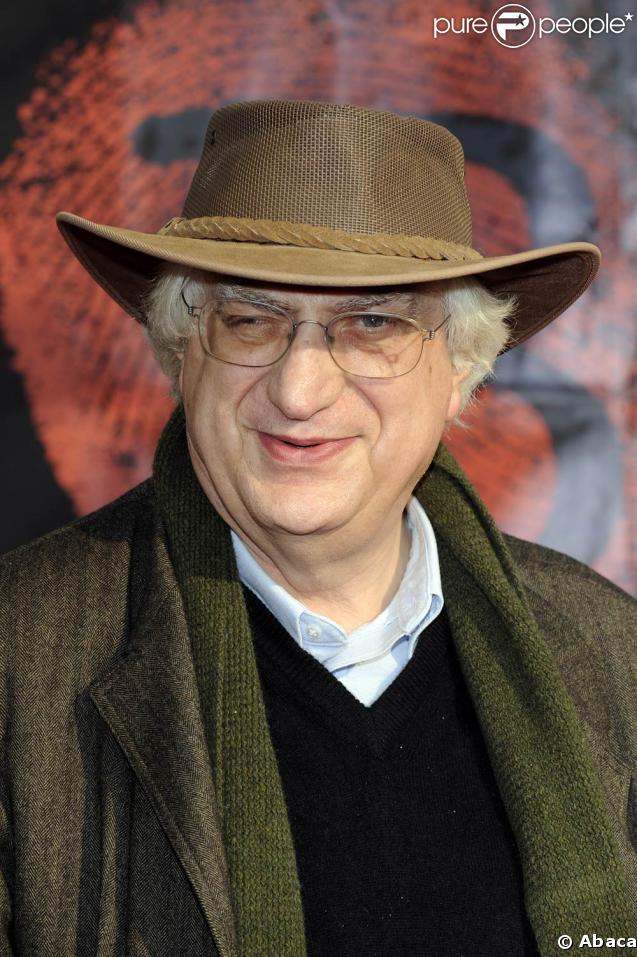
Wake up, Dreaming (127p.)
In 1992 Tavernier kept a year long diary for Projections. Initially it started as a shooting diary for L 627 but after about two weeks into the production Tavernier abandoned it due to time pressures. However even in its partial state the shooting diary is a wonderful insight into Tavernier's relationship with his actors, how he sets up scenes and what he was aiming to achieve with his sometimes messy and confusing policier.("(as a) starting point, I tried to find a light, open and undemonstrative dramatic line, dictated not so much by psychological motivations as by the nature of the job itself. I needed a structure that did not seem 'constructed',which would remain 'accidental', raw".)
The year long diary that follows is equally fascinating. Tavernier's breadth of knowledge, passion for cinema and the extent of his extracurricular activities in the service of neglected films seems unsurpassed by any other major director (maybe only Scorsese can come close to matching him). Tavernier is also a wonderfully analytic but never a didactic writer in the expression of his love for certain films and he's no shrinking violet, with the diary containing some very candid opinions on certain personalities.
Quote:
The essential question arises: how do you express routine and habit, essentially anti-dramatic notions which are organic to this job? How do you film a job so it becomes the only source of dramatization?A few visual ground rules are established: respect the different colours of street lighting (yellows and blues), not correct or soften them; eliminate as far as possible any descriptive shots and particularly any framing that over dramatizes an action; stay with the cops and see what they see when they tail or pursue suspects; never leave the point of view of the pursuer; refuse all stylistic effects inherent in the thriller genre; stick to the characters, follow their rhythm, reflect the routine and unstable nature of their life, and think at the same time as they do. A difficult choice, because the audience has a thousand formal, ideological references in its head - American references in particular: promotion of individualism, rejection of collective spirit, predominance of plot. I want to overturn these references.
Most importantly, avoid all judgement, all kinds ofpaternalism, and respect the rages and moods of Lucien Marguet - Lulu.
First of all, find a face for Lulu. Forget the model he's based on (my co-screenwriter: Michel Alexandre). Keep only his essential traits. I discarded the idea of giving him a beard. Since Claude Miller's film is running late I'm not going to have the actor I chose - Didier Bezace - until very shortly before we begin shooting, so there'll be no time for him to grow a beard. On the other hand, this morning, while filming the final tests, I was delighted with the idea of curling his hair. His moustache and glasses give him a working-class look.
The film needs a face that is unknown - one free of references - someone unfamiliar to (maybe having seen Didier less than the other actors will be just as stimulating in the end). Of the six actors who make up the police unit, one (Philippe Torreton) has no film experience; two have very little and never in these kind of parts (Didier Bezace and my companion Charlotte Kady); and two are being cast against type (Jean-Roger Milo and my son Nils).
http://rapidshare.com/files/401708677/I_Wake_Up_Dreaming_.pdf


0 comments:
Post a Comment